Fits end up in old emails and on paper, so every new fitter starts from zero. A passport keeps your fits and bikes with you, shared only when you say yes.
A bike fit passport is one record of every bike and every fit you have had, kept by you rather than by each fitter. Velograph's Passport is free. It keeps your bikes and the fits every studio records for you, and its card with a QR code lets a new fitter, coach or team ask to see them. Nothing is shared until you say yes on your own phone, and you choose which parts.
Why does every new bike fitter start from zero?
A new fitter starts from zero when your earlier fits sit in old emails, drawers and other studios' software. The fitter can measure you again, but not the history behind each change.
Many riders who have had a few fits will recognise this story. The first fit is a PDF in an old email. The second is a paper sheet in a drawer. The third lives in a studio's own software, and the studio has since closed. A team mechanic measured the race bike once and kept the numbers on a phone.
Then something changes. You move city, join a new team, buy a new bike, or your fitter retires. The next fitter measures you again, which is good practice. What they cannot measure is the history: why the left cleat has a shim, why the saddle came down after the knee surgery, which change finally cured the numb hands.
That history is often the most useful thing a fitter could know. Without it, they may undo a change that was there for a reason, or spend the first half of the session finding out what an earlier fitter already knew.
Which fit numbers should go with you to a new fitter?
For each bike, keep the saddle, handlebar, crank, pedal, shoe and cleat numbers, the frame's details and the story of each fit. Wherever you keep it, in Velograph, a spreadsheet or a notebook, a fit record is only useful if the next person can rebuild your position from it.
| Part | What to keep |
|---|---|
| Saddle | Height and how it was measured, setback, tilt, model and width |
| Handlebar | Saddle-to-bar reach and drop, bar width, stem length and angle, spacers |
| Cranks and pedals | Crank length, pedal model, any pedal washers |
| Shoes and cleats | Shoe model and size, insoles, and for each foot the cleat's fore-aft, rotation, wedges and shims |
| Frame | Make, model, size, and the frame's stack and reach |
| The story | Date, fitter, why the fit was done, what hurt, what changed and why |
The story row is the one most often missing, and it is the one that gives the numbers their meaning. Our guide on bike fit history explains why every fit is worth keeping, and moving your fit to a new bike shows how the numbers are used when you change frames.
What does a bike fit passport show?
Velograph's Passport shows your bikes, each with its own fit history, from every team you have ridden for and every studio that has fitted you in Velograph. It is a page in your free Velograph account.
A timeline follows one measurement across all your fits, with the reason for each fit. "Compare setups" puts two fits side by side, such as this year's against last year's, or the road bike against the time trial bike. You can also add fits you measured yourself, or fits from a fitter who does not use Velograph, and they are marked as entered by you.
The card is how you share it. It shows your face, your name and a QR code. By default, the front also shows your main bike's saddle height and setback, which helps a mechanic at a race. You can switch that off. Body measurements and joint angles never appear on the card.
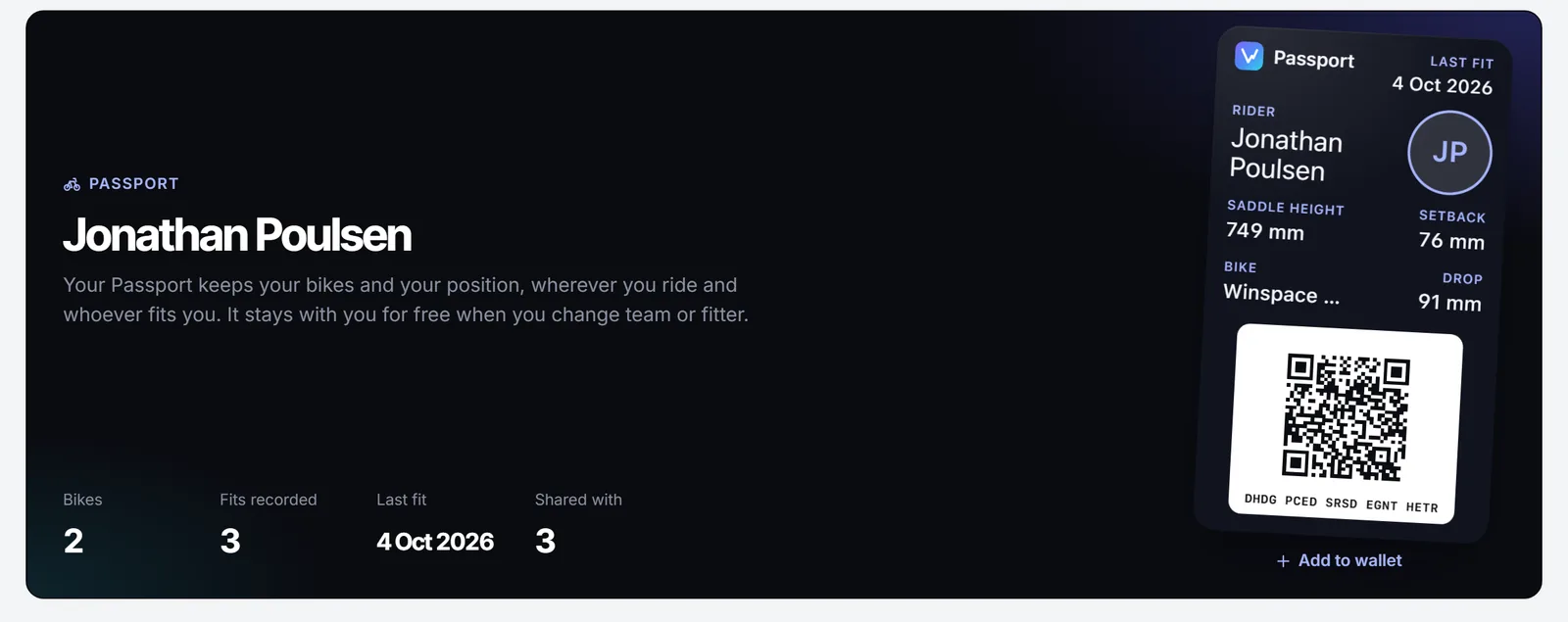
The QR code holds only your passport number. It points to your Passport but opens nothing by itself. If you lose your phone or someone photographs your card, you can renew the number, and the old one stops working at once.
Who can see your bike fit passport?
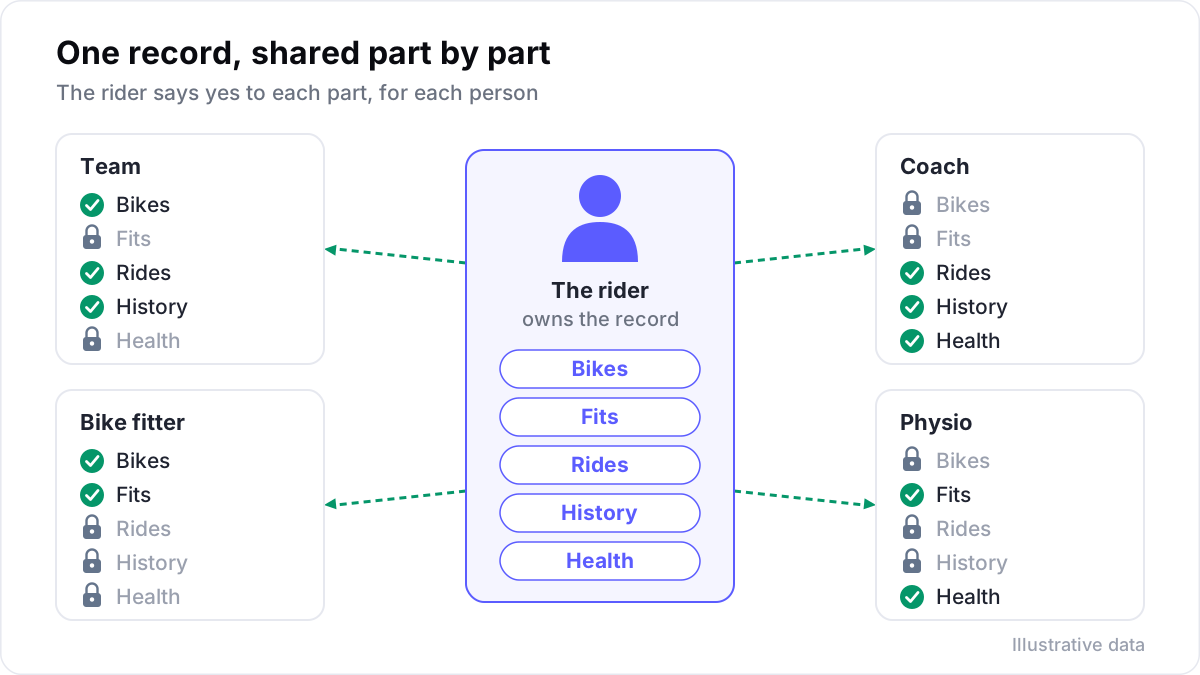
A fitter, coach, physio or team sees your Passport only after you say yes on your own phone, and only the parts you choose. When they scan your card, they see your name and face, nothing else.
Velograph then asks you what they may see. You can say yes, choose less than they asked for, or say no. A request that you do not answer expires after seven days.
A studio can ask for four parts:
- your email, birth date and height, so it can fit you and send you follow-ups;
- your bikes and fit history, including fits recorded by other fitters;
- summaries of your riding, which are weekly averages and never single rides or routes;
- notes from your other practitioners, which may hold health information.
A team asks for its own consents, such as your rides and training, your history from before you joined, and your bikes and fit history. You answer each one, and you can change any answer later under "Who sees what".
Our guide to athlete data privacy explains why consent per part matters, especially for health information.
What happens to your bike fits when you change fitter?
When you change fitter or team, your fits stay with you, because every fit a studio records for you in Velograph is saved in your Passport. A studio keeps the fits and notes it recorded itself, so your fitter or physio never loses their own work. Anything recorded elsewhere is shared only if you allow it.
If a studio fitted you before you had an account, it can give you your Passport with an invitation link. Once you accept, the fits it recorded move into your own account.
The Passport is part of Velograph's free Rider plan, which never expires. It sits next to your rides and ride analysis, described in our article on a free cycling app for your bikes, fits and rides.
How does a bike fit passport help fitters, physios and teams?
A rider who arrives with a Passport saves a fitter, physio or team time. You scan the card, and once the rider agrees, you start the session from their last fit and the reasons behind it rather than from a blank sheet.
For a physio, the bike fit explains a lot about a sore knee or back, and the fitter benefits from the physio's findings in return. Our article on the physio and the bike fitter shows how two experts can work from one record the rider owns.
For a team, a new signing's bikes and fits can arrive on the first day, with the rider's consent. The mechanics can set up race and spare bikes from the numbers, and the team's fitter starts from the rider's history rather than from a tape measure.
Getting your Passport
You can start for free as a rider: create your account, add your bikes and enter the numbers you have. The next time a studio that uses Velograph fits you, the fit is saved in your Passport. Studios and teams can see their plans on the pricing page.