Sit-bone ache, numbness and saddle sores each point to a different fit check. What to change first, one step at a time, and when to see a doctor.
When you get saddle pain cycling, where it hurts tells you what to check first. An ache under the sit bones points to the saddle's width and padding and to how many hours you ride. Pressure or numbness further forward, in the soft tissue between the legs, points to saddle tilt, the shape of the nose and how far the handlebar makes you roll forward. Chafing and saddle sores point to shorts, hygiene and a saddle set so high that the hips rock. These are fit checks, not a diagnosis, and a few signs mean you should see a doctor first.
When should I see a doctor about saddle pain?
See a doctor if numbness or tingling lasts after you get off the bike, if a sore or lump grows, feels hot, swollen and painful, or comes with fever or chills, or if sores keep coming back. These need an examination, which a bike fitter cannot give.
Call 999 or go to A&E if back pain or sciatica comes with numbness around your genitals or anus, numbness or weakness in both legs, or new trouble peeing or pooing. The NHS lists these on its back pain and sciatica pages as signs of a serious back problem.
Some saddle sores start as infected hair follicles or boils, so the NHS advice on boils is a fair guide. It asks for an urgent GP appointment when the skin around a boil feels hot, painful and swollen, or when you feel hot, cold or shivery. It advises a GP visit when a boil has lasted two weeks despite self-care, or when boils keep coming back.
For pain in the muscles and joints around the pelvis, or on one side only, a physiotherapist can look for causes that no saddle fixes, as our article on how a physio and a bike fitter work together describes. Everything below is for discomfort that builds on the bike and settles off it.
Why does my bike saddle hurt?
A saddle hurts through pressure, friction or both, on one of three areas: the sit bones, the soft tissue in front of them, and the skin where the inner thighs move past the saddle. Each area has its own causes, so finding where it hurts tells you which check to make first.
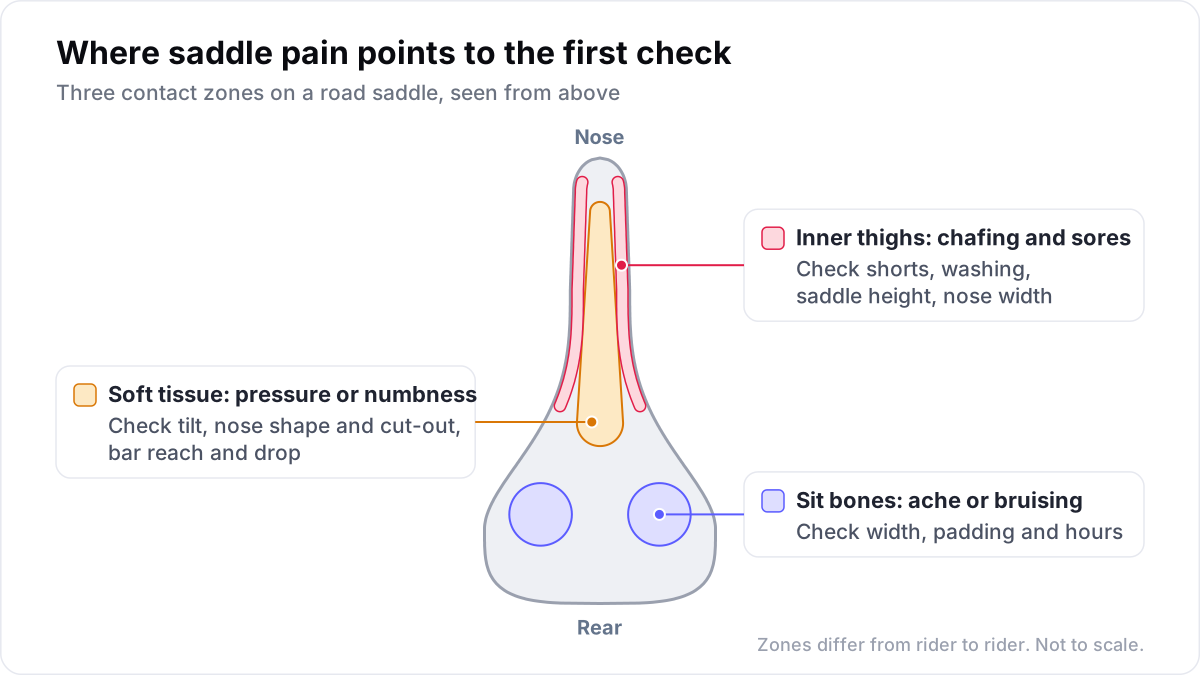
| Where it hurts | What it feels like | First checks |
|---|---|---|
| Under the sit bones | A dull ache or a bruised feeling | Saddle width and padding, a recent rise in hours, a saddle twisted on its rails if one side hurts |
| In front of the sit bones | Pressure, tingling or numbness | Saddle tilt, nose shape and cut-out, handlebar reach and drop, setback |
| Inner thighs and the skin of the saddle area | Chafing, raw skin or sores | Shorts and their pad, washing, saddle height, nose width |
The three can overlap. A 2022 scoping review by Napier and Heron found that saddle sores come mainly from repeated pressure and friction, with long rides the risk factor named most often. In interviews with 20 competitive female cyclists, Burnie and colleagues heard the same causes, pressure, friction and sweat, often together. The riders also named time trial positions and indoor riding, where it is harder to shift on the saddle.
Why do my sit bones hurt after cycling?
Sit-bone ache usually means the bones carry more load than they are used to, through more hours, a pad that is thin or worn, or a saddle too narrow for them to rest on. Riders who are new to cycling, or back after a break, often feel it for the first weeks.
Cycling UK's saddle guide calls some discomfort normal for new and returning riders, and says it should gradually disappear as the body gets used to the bike. If it does not ease once your rides are regular, look at three things:
- Width. The sit bones should rest on the saddle's wide rear part, not on its edges.
- Padding. How a pad feels is not the whole story. In a laboratory test of three pads with nine club cyclists, Marcolin and colleagues found the riders rated the basic pad well, although peak pressure on the soft tissue rose under it over 20 minutes. Judge a pad on long rides.
- Hours. Going from two-hour rides to five-hour rides loads the same bone for far longer. Build long rides up over weeks.
An ache on one side only deserves a closer look. A saddle twisted on its rails, a difference between the legs or the cleat set-up can each put more weight on one side, and a fitter checks those before changing the saddle.
Why do I go numb on my bike saddle?
Numbness comes from pressure on the soft tissue in front of the sit bones, which can squeeze the nerves and blood vessels there. It usually means too much weight on the nose of the saddle, from a nose tilted up, a handlebar that rolls you forward, or a nose shape that does not suit you.
The handlebar matters too. Partin and colleagues measured 48 competitive female cyclists and found that a handlebar lower than the saddle went with higher pressure on the soft tissue and less sensation in the genital area. In a survey of almost 4,000 men, Awad and colleagues found that cyclists whose handlebar was level with or above the saddle had lower odds of genital numbness and of saddle sores. Cyclists who stood on the pedals for more than 20% of the time had lower odds of numbness. Both studies show links, not proof.
Saddle shape changes the pressure too, and each change has a price. A 2021 meta-analysis by Litwinowicz and colleagues found that saddles with no nose cut the pressure on the soft tissue in healthy men, at the cost of stability and more pressure at the back. In a field test of 30 riders, Bressel and colleagues found that a saddle with a full cut-out lowered the pressure at the front but felt less stable. So try a cut-out or a short nose on your own bike before you buy one.
Tilt is the quickest check. Cycling UK's guide suggests tilting the nose down one or two degrees at most. Tilting it further can slide you forward onto your hands, which moves the problem instead of solving it. Stand on the pedals for a few strokes every ten minutes or so, above all indoors, where the bike does not move under you. The meta-analysis found indirect support for this habit.
What causes saddle sores?
Saddle sores come from pressure and friction on skin that sweat keeps warm and damp, mostly on long or hard rides. Shorts that fit badly, a pad that is not washed after each ride, sitting in damp kit afterwards and a saddle so high that the hips rock all add to the risk.
In practice, that means:
- Wash your shorts after every ride, and start each ride in a clean pair.
- Wear nothing under padded shorts. They are made to sit against the skin, so the seams of underwear rub, as Cycling UK's guide explains.
- Get out of your shorts soon after the ride and wash. Riders in the interview study changed straight after the ride, and some skipped the café stop to do so.
- Use chamois cream if it suits your skin. It cuts friction and is the measure cited most often in the review. One rider in the interview study found it blocked her pores, so try it on shorter rides first.
- Check the saddle height. A saddle set too high makes the hips rock, and every rock rubs the same skin. The saddle height guide lists the signs of a saddle that is too high.
In what order should you change things?
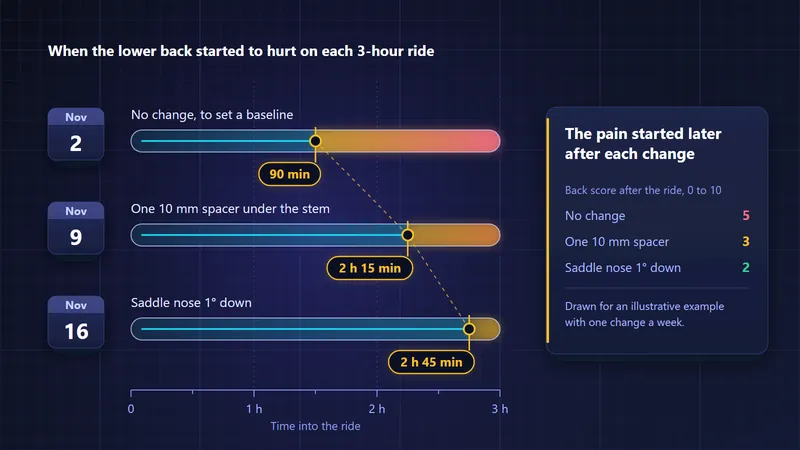
Change one thing at a time, in this order: shorts and hygiene first, then saddle height, setback and tilt, then the handlebar's reach and drop, and the saddle itself last. Ride for a week or two between changes and score how each ride felt, so you know which change helped.
- Shorts and hygiene. They are cheap and quick to change, and they take friction off the list.
- Saddle height. The other settings depend on it.
- Setback. Where the saddle sits on its rails changes where you sit on it.
- Tilt. Start level, then try one degree nose-down at a time, up to two.
- Reach and drop. A shorter or higher handlebar rolls the pelvis forward less.
- The saddle. Only now try another width, a shorter nose or a cut-out, set to the old height, setback and tilt.
In a study of 34 amateur cyclists by Rizo Albero and colleagues, the furthest-back of three saddle positions raised the pressure at the front, in the pubic region, and lowered comfort. Our guide to saddle setback shows how to measure it at home. Measure a new saddle to the point where your sit bones rest, not to its nose, and give it several rides.
A short log shows which step helped. An illustrative example, for a rider who goes numb indoors:
| Date | Change | Ride | Where it hurt | Score from 0 to 10 | It started after |
|---|---|---|---|---|---|
| 3 November | None, to set a baseline | 2 hours indoors | Front, numb | 6 | 40 minutes |
| 10 November | Nose tilted 1 degree down | 2 hours indoors | Front, numb | 4 | 70 minutes |
| 17 November | Stem 10 mm shorter | 2 hours outdoors | Front, slight pressure | 2 | 2 hours |
When does saddle pressure mapping help?
Pressure mapping helps when the checks above have not settled the pain, when you are choosing between saddles, or when one side keeps carrying more load. It shows where you sit and how hard you press, but not friction, heat or what happens under the skin.
A fitter maps a few minutes on a trainer, changes one thing and maps again in the same session, as our guide to saddle pressure mapping explains. Your own score after a few weeks of real rides still shows whether the change worked.
How do you keep track of saddle changes?
Write down the saddle model, its height, setback and tilt, the shorts you rode in, each change with its date, and how the next rides felt. Finding a comfortable saddle is often trial and error, and a record stops you from repeating the errors.
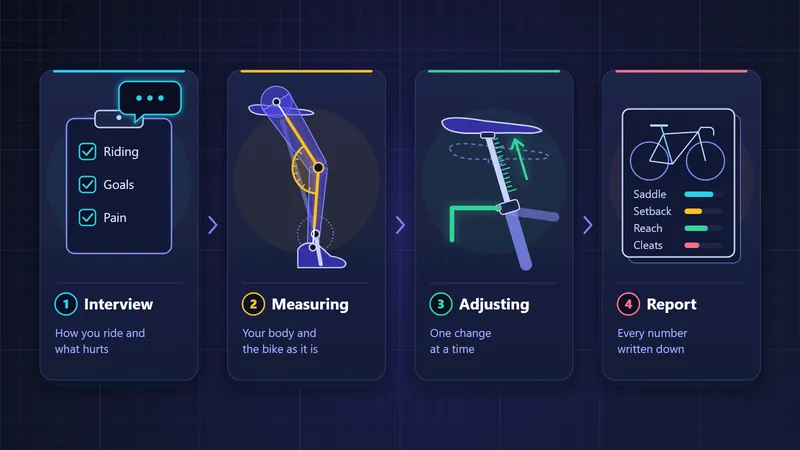
The riders in the interview study described that search as long and costly. A record helps the next fitter too, as our article on bike fit history explains. In Velograph, a studio can score discomfort in the saddle area from 0 to 10 at the fit, and each follow-up asks about the same spot again, so the fitter sees whether it eased. The rider keeps every fit in their own record, and our page for riders sets out what a rider gets on their own.
Further reading
- Getting to the bottom of saddle sores: a scoping review of the definition, prevalence, management and prevention of saddle sores in cycling, International Journal of Environmental Research and Public Health, 2022.
- Female cyclists' experiences of saddle sores and their effect on cycling, Frontiers in Sports and Active Living, 2026.
- Strategies for reducing the impact of cycling on the perineum in healthy males: systematic review and meta-analysis, Sports Medicine, 2021.
- Guide to saddle comfort for women, Cycling UK.
- Boils, NHS, 2023.
Velograph is not affiliated with, sponsored by or endorsed by any team, rider or company named in this article. Names are used only to refer to publicly reported work.