What a sizing, basic, full and motion-capture bike fit include, what makes one cost more than another, how to judge value and what to ask before booking.
Bike fit cost depends on four things: how long the fitter spends with you, the training and equipment behind the session, whether follow-ups and parts are included, and what you take home. A short sizing session and a full fit with motion capture, which can take a few hours, are different services, so compare what each includes before you compare the figures. This guide gives no prices, because every studio sets and changes its own. It explains what sits behind each line of a price list, how to judge value, and what to ask before you book.
How much does a bike fit cost?
The cost of a bike fit rises with the level you book, from a short sizing session to a full fit with motion capture, and each studio publishes its own list. Compare like with like: the time with the fitter, what is measured, the follow-ups, the parts and the written report.
BikeRadar's guide to bike fits notes that many fitters sell fixed menus, from basic sizing up to scans and motion capture, and that some charge by the hour for advice on one part of the position. Some shops include a fit, at a discount or at no charge, when you buy a bike from them.
What does each level of bike fit include?
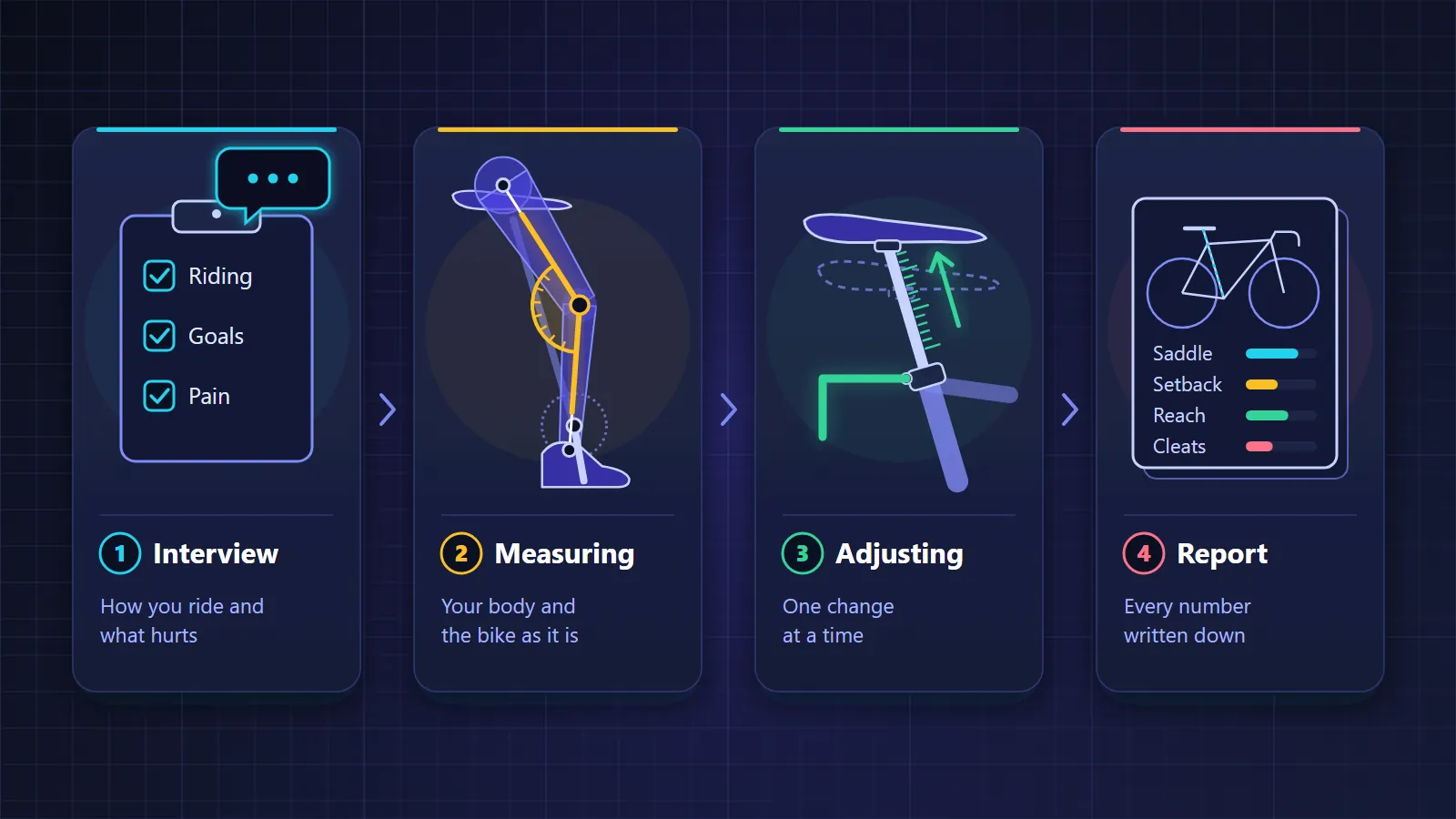
A sizing fit finds your frame size before you buy. A basic fit sets the saddle, cleats and bar on your own bike. A full fit adds a conversation about your riding and pain, off-bike tests and adjustments while you pedal, and motion capture measures your joints in three dimensions as you ride.
| Level | What usually happens | Book it for |
|---|---|---|
| Sizing fit | Body measurements, sometimes a sizing jig, and a list of frames and sizes that fit | Choosing a new bike |
| Basic fit | Saddle height, setback and tilt, cleats and bar position, set on your bike | A first adjustment when nothing hurts |
| Full fit | Goals, riding and pain discussed; flexibility and foot checks; shoes and cleats; changes while you pedal, often filmed; a report and a follow-up | Pain or numbness, a new kind of riding, a refit |
| Full fit with motion capture | The full fit, with cameras tracking markers on your joints in three dimensions | Problems a simple video does not explain |
| Add-ons | Saddle pressure mapping, a physio assessment, custom insoles, a time trial or triathlon position | One specific problem or event |
A quick check against your last fit record is a shorter service again. Our guide to when to get a bike fit explains when a check is enough and when a full fit pays off. Pressure mapping has its own guide, saddle pressure mapping, and so does the time trial bike fit.
What makes one bike fit cost more than another?
A longer session with more tests usually costs more, because much of what you pay for is the fitter's time. After that come the fitter's training and background, the equipment, whether parts and follow-ups are included, and the studio's own costs, such as rent in a city centre.
- Time. The hours with you, and the time it takes to write the report.
- The fitter. Training, years of fitting and any clinical background, such as physiotherapy. In 2017 the International Bike Fitting Institute (IBFI) described four certification levels, earned by credits from courses, conferences, technology, professional development and academic work. Its public directory lets you filter fitters by level.
- Equipment. Motion capture, pressure mapping and sizing jigs cost a studio money to buy and time to learn.
- Parts. A new saddle, stem, cleat wedges or insoles may be part of the price or extra. Ask which.
- Follow-ups. BikeRadar says a good fitter will usually include a follow-up after a few weeks of riding. Check whether later adjustments are included too. Our article on the bike fit follow-up shows what a good one covers.
- Guarantees. Some fitters offer a money-back guarantee.
Is the fit that comes with a new bike enough?
A fit that comes with a new bike can be enough if it covers your shoes and cleats, watches you pedal and includes a follow-up. If it only sets saddle height and bar position on the shop floor, treat it as a setup, and book a full fit when something hurts or your riding changes.
Is a more expensive bike fit a better one?
A higher price does not by itself buy a better fit. Motion capture measures joint angles more precisely than the eye, but the result depends on the fitter's training and judgement, the time spent with you and the follow-up. A well-trained fitter with a camera and a plumb line can beat a poorly trained one with every system.
Andy Brooke, director of the IBFI, said in a 2017 interview with Cycling Industry News: "It shouldn't matter what system a fitter uses, it's the end result that matters." He added that a fitter without good training may not get a good result, whatever the equipment.
Systems also measure differently. Video from one camera and 3D motion capture can disagree by a few degrees at the knee, as our guide to checking your bike fit at home shows. So ask how each number in your report was measured, and compare it only with numbers taken the same way.
Is a bike fit worth the money?
A bike fit is most worth the money when you ride many hours a week, when something hurts or goes numb, or when you are choosing a new bike. If you are comfortable and nothing has changed, a quick check, or no fit at all, may be enough.
There is evidence for the first case. In a randomised trial, Dias Scoz and colleagues gave 162 amateur cyclists either a fit based on 3D motion capture or a handout of posture advice. After 15 days, the fitted riders reported more comfort, less fatigue and less pain. If pain began suddenly, after a crash, or stays off the bike, see a physio or doctor before you book a fit.
Three questions decide whether a fit was good value:
- Was the problem you came with solved, or clearly improved, by the follow-up?
- Did you leave with a record you can reuse? A report with every number and its reference point sets up your next bike without starting again.
- Did someone check the position after a few weeks of normal riding?
The record is the part you use again. Without it, the next bike starts from zero.
What should you ask before you book a bike fit?
Ask what the session includes and how long it lasts, who will fit you and what training they have, how they measure, whether follow-ups and parts are included, and whether you get a written report with every number. The answers tell you more than the figure on the price list.
- What happens in the session, and how long will I spend with the fitter?
- Who will fit me, and what training or certification do they have?
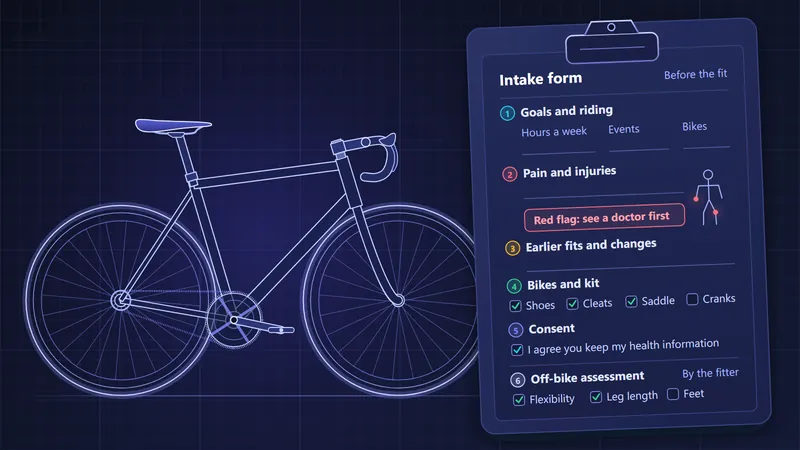
- Will you ask about my riding, injuries and pain first, and is there a form to fill in before I come?
- Will you watch me pedal, and how do you measure: by eye, on video or with motion capture?
- Do you fit my own bike, in my own shoes?
- Is a follow-up included, and when is it?
- Are new parts included, and can I try a saddle before I buy it?
- Will I get a written report with every number and the point it was measured from?
- What happens if the position still does not feel right after a few weeks?
- Who can see my health information, and how is it stored?
A studio that sends a form before the visit has started the fit before you arrive. Our bike fit intake form shows what a good one asks.
How do you compare two bike fit offers?
Put the two offers side by side, line by line, before you look at the totals: time with the fitter, who fits, how they measure, off-bike tests, follow-ups, the report and parts. Pay more only for the lines you need.
| Offer A | Offer B | |
|---|---|---|
| Time with the fitter | 75 minutes | 2.5 hours |
| Who fits | A shop fitter with an in-house course | A fitter who is also a physiotherapist |
| How they measure | By eye, with a plumb line | Video while you pedal |
| Off-bike tests | None | Flexibility and feet |
| Follow-up | None | One, three weeks later |
| Report | Saddle height and bar position | Every number with its reference point |
| Parts | Extra | Cleat wedges included |
In this illustrative pair, offer B costs more and gives you more of what lasts: the follow-up and a full record. Offer A may be all you need if nothing hurts and you only want the saddle and bar checked.
What should you take home from a bike fit?
Take home a written report with every measurement before and after, the point each one was measured from, every change and its reason, the parts fitted, and the date of the follow-up. Without the reference points, the numbers are hard to reuse on another bike or with another fitter.
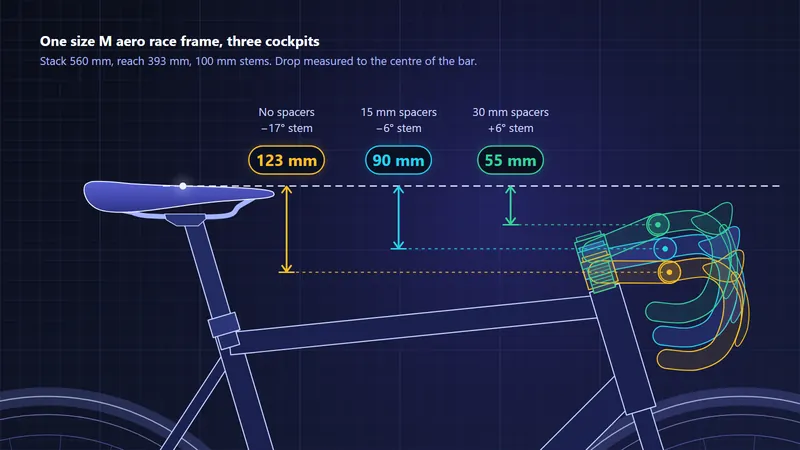
BikeRadar's guide also says you should receive a written report of your fit and its key dimensions. Reference points matter more than they seem. Saddle-to-handlebar drop, for example, can be measured to the top or the centre of the bar, 16 mm apart, as our guide to handlebar drop explains.
Keep every report, not only the latest. Our articles on bike fit history and the bike fit passport explain why the older ones matter. Velograph's free Rider plan keeps a rider's bikes, bike fits and rides with ride analysis, with no end date, and the rider decides which fitter or team can see them. Our page for riders sets out what a rider gets on their own.
Further reading
- Bike fits explained: what is a bike fit and should you get one?, BikeRadar, 2023.
- IBFI interview: where does the industry stand with bike fitting gone bad claims?, Cycling Industry News, 2017.
- Find a certified bike fitter, International Bike Fitting Institute, 2026.
- Effectiveness of a 3D bikefitting method in riding pain, fatigue, and comfort: a randomized controlled clinical trial, Sports Biomechanics, 2025.
Velograph is not affiliated with, sponsored by or endorsed by any team, rider or company named in this article. Names are used only to refer to publicly reported work.